The Indian Express
Newsroom intelligence
For The Indian Express, we built a live system for the newsroom. It brings the many sources a desk watches into one place and helps editors decide faster what to cover.

It is built for a laptop or desktop screen, with animations and interactive graphics that need the room.


Every newsroom is now asked for more stories, in more formats, at higher quality, with fewer people. Wizzardzz automations take over the routine work that no longer needs a journalist's judgement in 2026, so a leaner team can do far more: hold readers longer with animated explainers, interactive graphics and slideshows, get cited by AI search, and reach readers directly.



We are an editorial AI company, started by people who have run news desks. We build systems that help a newsroom publish more, faster and in its own style, and reach readers wherever they are. Every tool follows the newsroom's rules, and editors decide what goes out.
Hover or tap a card for more
Explainers, interactive graphics and slideshows on every big story.
Readers spend longer on a page that moves and responds, and come back when the news moves again. Every format is built from your own reporting and drops straight into the article.
Fast video edits that are not "AI-generated" video.
The same animated explainer used to take a three-person team, a writer, an animator and a video editor, about two days. Motion Desk turns it round while the story is still breaking, from your own fonts, photos and data. No generated faces or footage.
Readers increasingly take the AI answer and never click. We make your reporting the source those answers quote and link back to.
Answer-first structure, depth on every topic and clean metadata make Punjab Kesari the source Google AI Overviews, ChatGPT and Gemini quote, in Hindi and English.
Every source on one ranked screen, and stories pushed to readers.
Every wire, rival story and reporter's WhatsApp lands on one ranked screen. Finished stories go straight to WhatsApp, Instagram and Facebook through an approved Meta technology provider.





For The Indian Express, we built a live system for the newsroom. It brings the many sources a desk watches into one place and helps editors decide faster what to cover.
Outlook started with WritePod, our editorial writing workspace, which ran its full term. The desk now uses DraftOne, which turns agency copy and research into publication-ready drafts in Outlook's house style, and WIZ, which assigns tasks on WhatsApp and follows up until they are done.
Readers now ask Google, ChatGPT and Gemini, and read the answer. The answer quotes a handful of sources. Being one of them is the new front page.
Two in three searches now finish without a visit to any website.
They appear on more than one in five searches. When they do, clicks to websites fall by more than half.
Publishers expect a further fall of more than 40% over the next three years.
News citations in AI answers go to a small group of publishers. The rest are invisible.
Hindi answers draw on a small pool of Hindi sources. Punjab Kesari can own that pool before others do.
AI platforms quote pages that answer clearly, are fresh, name people and places precisely, and come from a publisher that covers the topic in depth. Each of these can be engineered into the newsroom's daily work, without changing how your reporters write.
The answer sits in the opening lines, in a form AI can lift. Micro-edits only, accepted or rejected sentence by sentence.
The desk sees the story first and publishes first. Freshness decides many citations.
A planned cluster of stories that covers every question readers ask, linked together.
Headlines, summaries, entities and structured data generated for every story.
AI answers increasingly show video. Explainers give the platforms more of your work to cite.
Illustration of a Google AI Overview · the goal is to hold a source slot on the questions that matter
A weekly tracker of the Hindi and English questions that matter to you. It checks Google AI Overviews, ChatGPT, Perplexity and Gemini, and shows who gets cited: Punjab Kesari, or a rival. The desk sees where it is winning and which stories to strengthen.
Readers in Hindi, Punjabi and Urdu increasingly get their news as video. Motion Desk turns stories, data and print pages into animated explainers and shorts, at the pace of the news desk.
A 30-second Motion Desk explainer, sketched live: Hindi voiceover with subtitles, the Nifty chart, foreign selling, three causes and an anchor cut. Figures as reported in October 2026. Click to pause.
Hover or tap a card for more
60–90 seconds on what happened and why it matters.
Script from your copy, scenes from your photos and maps, ready in Hindi and English.
Markets, budgets, prices, rainfall and AQI as animated charts.
Sensex, rupee, budgets and rainfall drawn straight from the numbers, and redrawn when they change.
Floods, routes, borders, constituencies and the spread of an event.
Districts, routes and constituencies on your own base maps, revealed step by step.
Court cases, careers, disputes and how a story got here.
Every date checked against your archive, so readers see how the story built up.
Live tallies, seat cards, swing maps and winner reels as results come in.
Seat cards and tallies refresh as results are declared, ready for web, social and TV.
Every major story gets a 9:16 version for YouTube Shorts, Reels and WhatsApp Status.
A 30–60 second vertical cut of each big story, captioned for sound-off viewing.
A branded video card within minutes of a wire alert, before the full story.
Headline, photo and key line on a branded card, out before the full story is filed.
Swipeable photo and fact slideshows that keep readers on the page.
Photo and fact slides built from the story, each slide its own share card.
Captioned audiograms cut from interviews, podcasts and anchor clips.
Waveform, captions and speaker names over the best 30 seconds of a conversation.
Speeches and statements as kinetic captions, attributed and timestamped.
The exact words, the speaker and the time, checked before they go out.
The day's top print stories as a two-minute video brief at 7 am.
The front page as a short video brief, on WhatsApp before readers open the paper.
"This day in history" and anniversary films from your own archive.
Anniversary films from decades of your own photos and reports.
Calculators and explorers readers operate themselves.
Readers change a number and see what the story means for them. Two examples follow below.
Cricket and kabaddi recaps built from scorecards, minutes after the match.
Key moments and stats from the scorecard, cut into a recap minutes after the final ball.
Hindi, Punjabi, Urdu and English from one master.
One master edit, with captions and voice in each language.
Send a story, a dataset, a print page or your own script. Our team returns finished explainers, shorts, slideshows and interactive graphics in your style, on an agreed daily or weekly volume. Ready to start now.
Most desks can't build these on deadline. A reader changes a number and sees what the story means for them. They stay longer, share more, and come back when the news moves again. Each one drops into any article with a single line of code.
Demo stories. The numbers in both examples are illustrative and have not been verified. They show how the format works, not reporting.
The RBI raised the repo rate by 0.25 points to 5.50% on 7 October 2026. Floating-rate home loans follow.
Sets their own loan amount, tenure and interest rate, and tries a rate change. The EMI and the extra interest update instantly.
Hindi first, English in one tap. Works on any phone, loads fast, and carries the story link.
Fuel prices, budgets, rupee, gold, election swings, monsoon rainfall.
Foreign investors are selling Indian shares while Indian institutions buy. Who is on each side, and where do household savings fit?
Scrubs a timeline to find the day both sides flipped, guesses the one industry foreigners bought, and opens each savings measure.
Every choice rewrites the narration. Listen in Hindi or English. Light or dark. Keyboard and touch.
Different measures keep their own scales, and the sample data is labelled as unverified on screen.
Try them: open the EMI calculator and the Great Money Migration story on the web version of this proposal.
Tools that read, sort and route news work in every language from day one. Tools that write copy are tuned with a style sheet for each language and calibrated with your editors. The plan follows that order.
 Ready in every language
The live desk. Everything the desk needs to see arrives in one place, scored for your readers, and routed to the right person. Select a source to follow its path.
one screenA dashboard of what came in, what was used and how fast, by desk and by person.
Each story's journey is recorded: who picked it up, edited it and filed it, and when.
Reporters, sub-editors, desk heads and admins each see and do what their role allows.
SEO and AI-search metadata, a summary and five key points, generated automatically.
Stories go to your CMS in one step. Easy to connect to the system you already use.
The day's important stories, ranked and colour-coded by how long they have waited.
Cadence reads, sorts and routes. Language is not a barrier. Your desk can use it within weeks.
An agentic newsroom system that turns a wire story or a brief into a publication-ready draft in house style. Editors approve the research and the structure before a word is written. Select a step to see the screen.
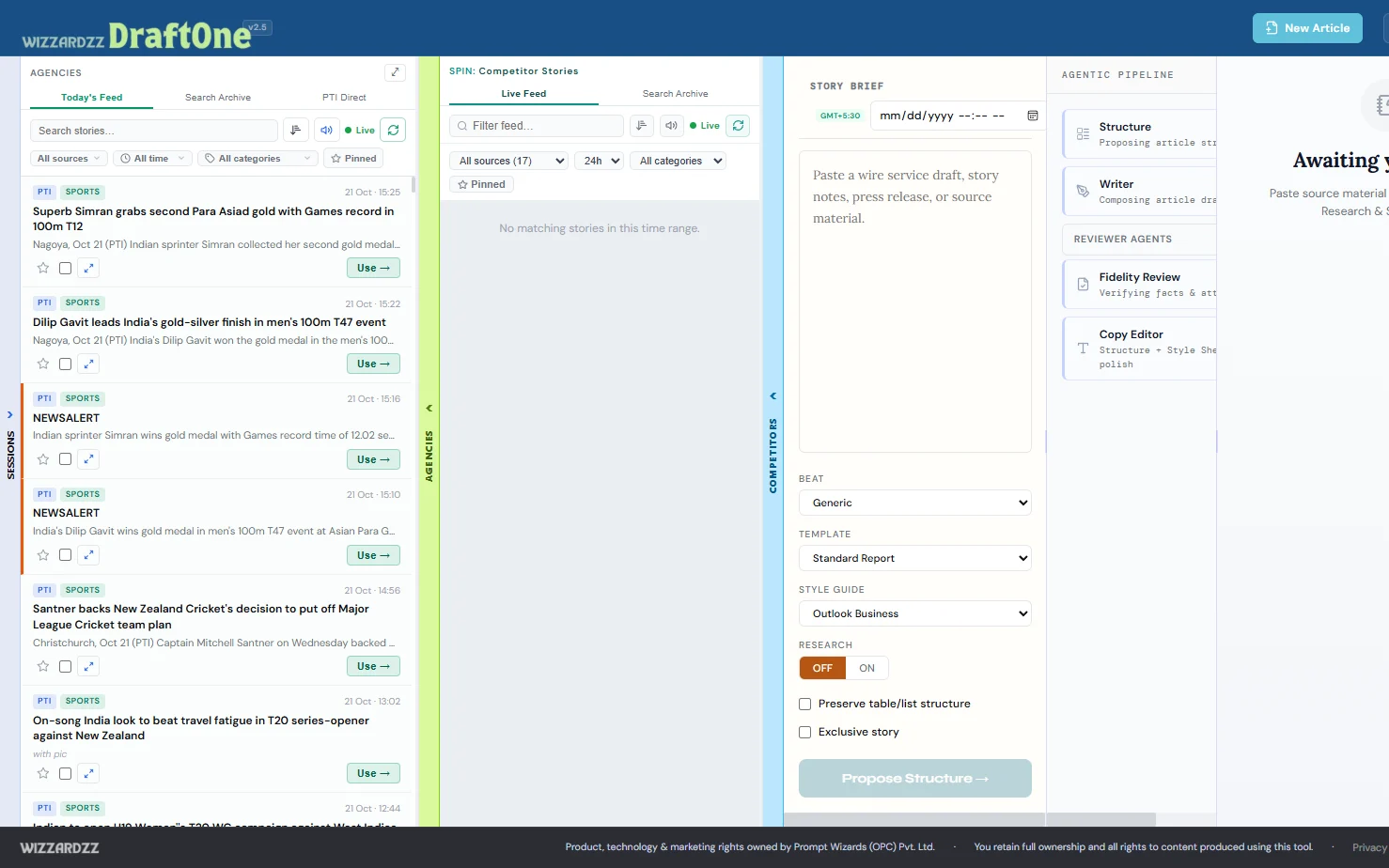
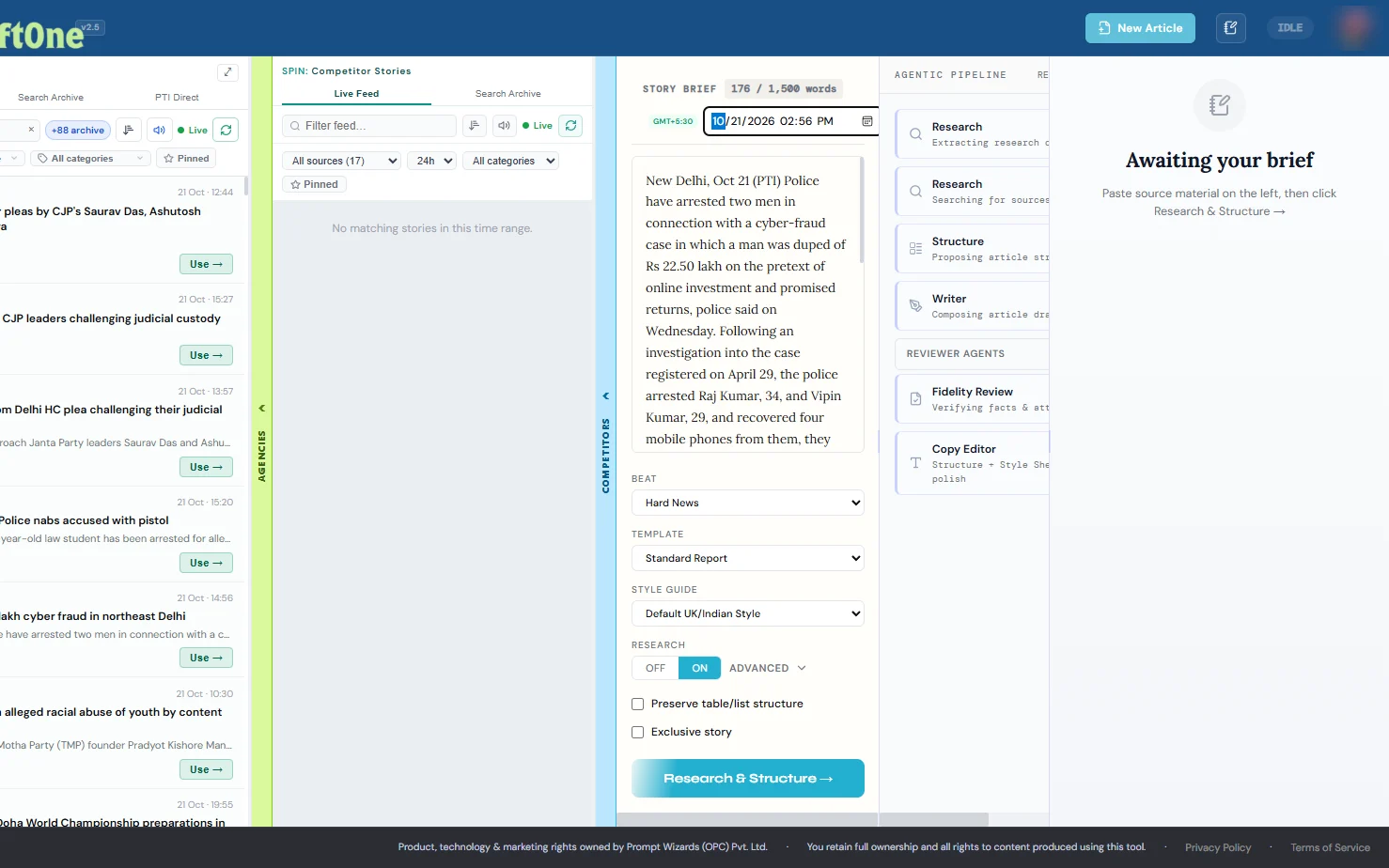
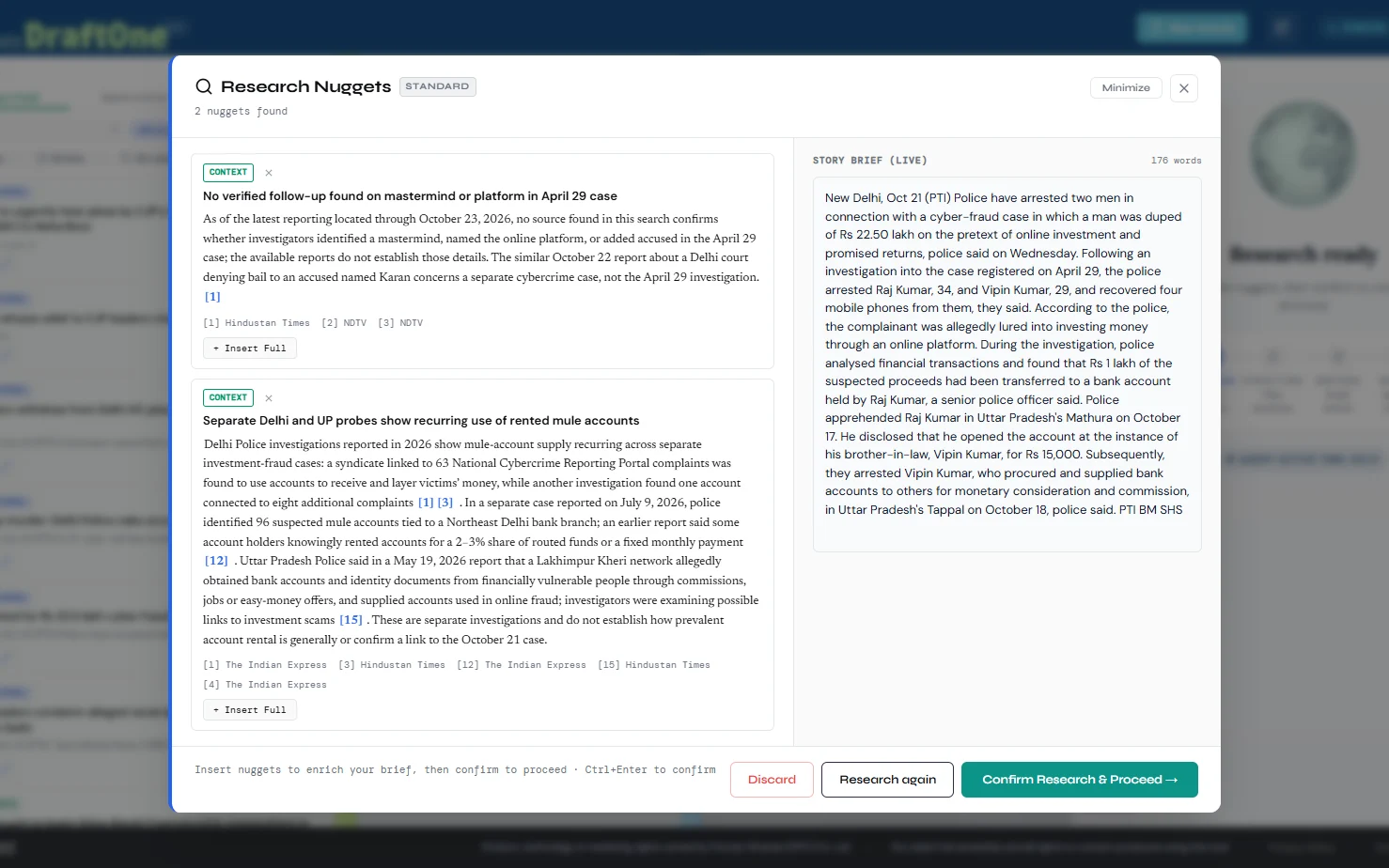
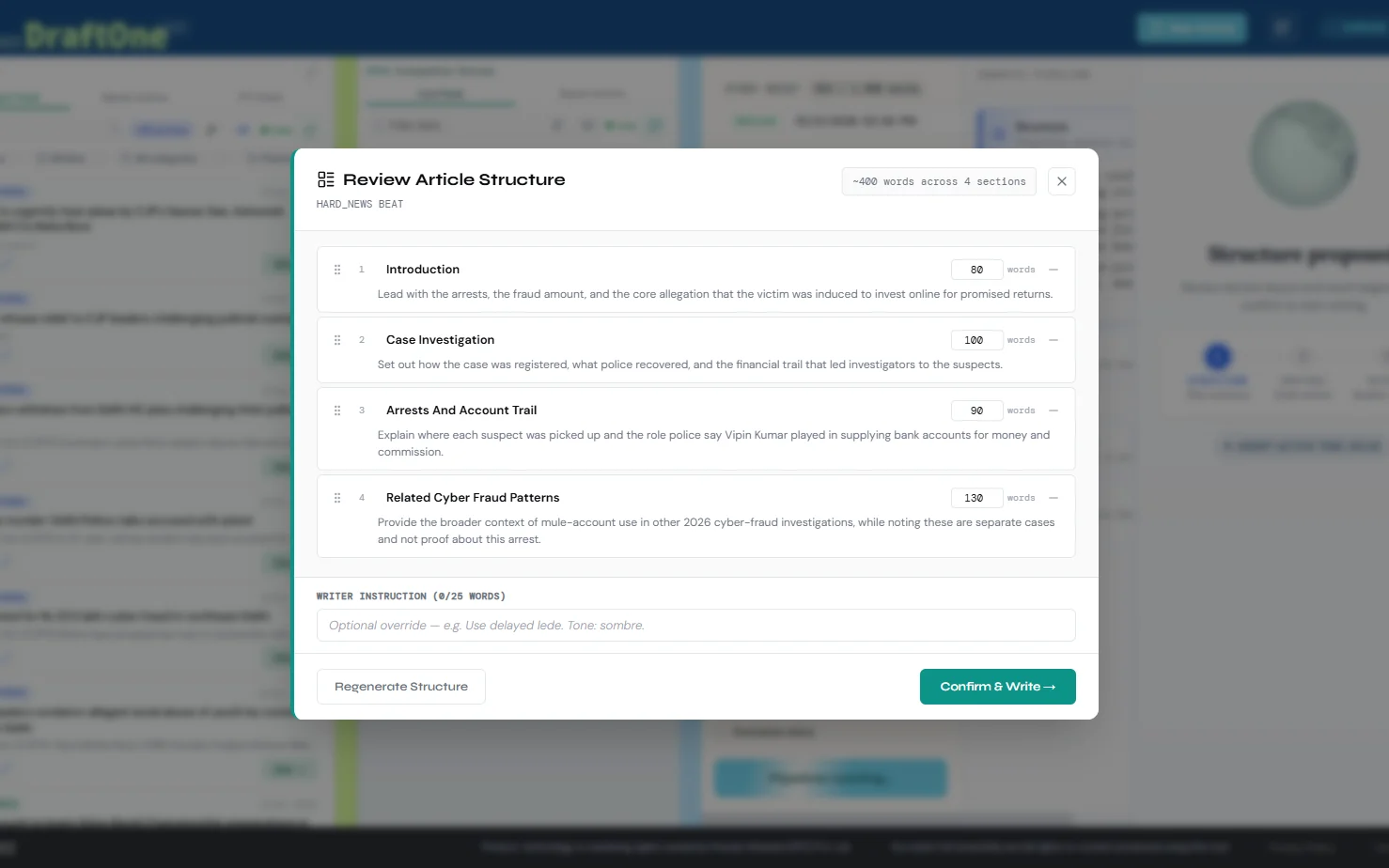
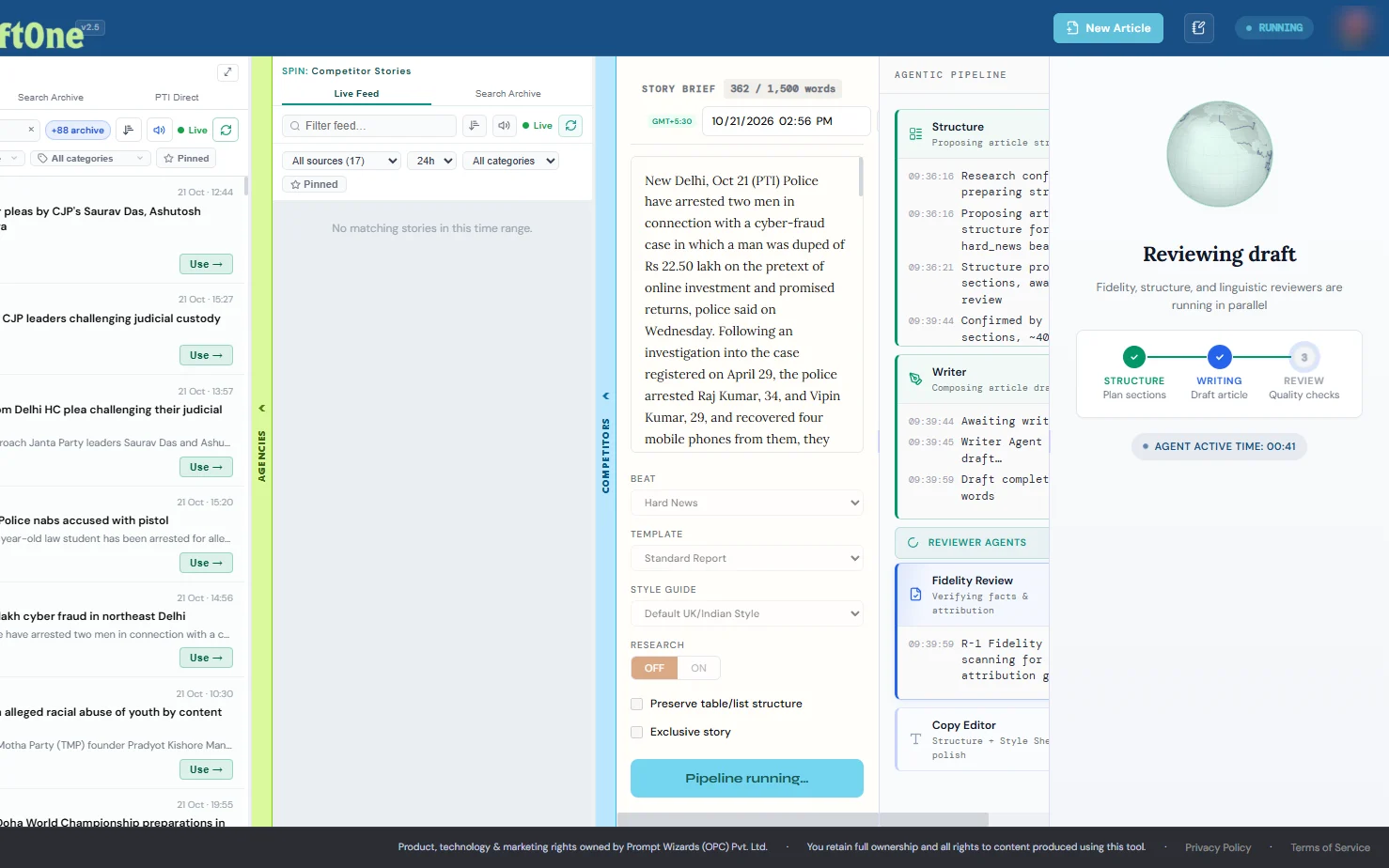
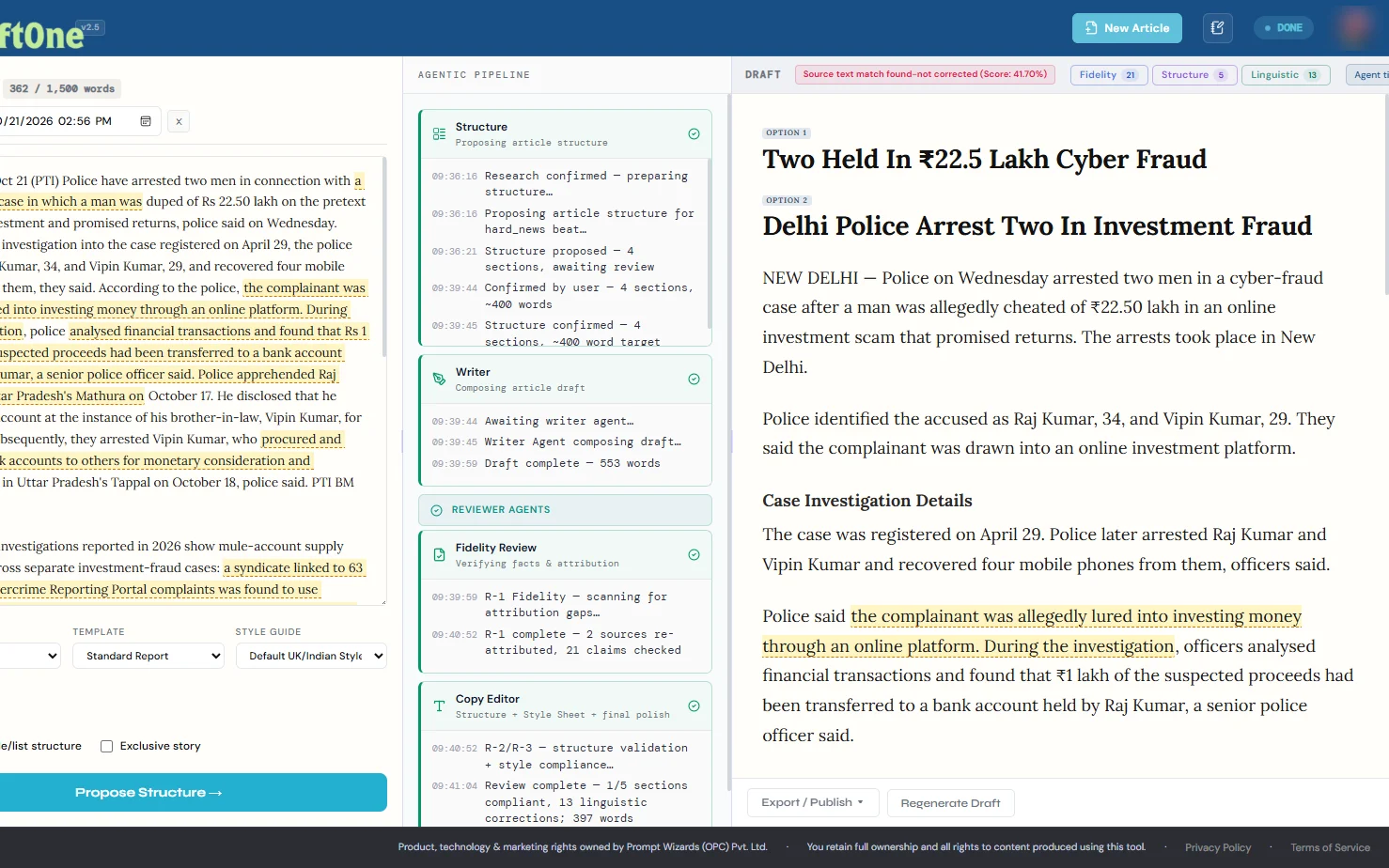
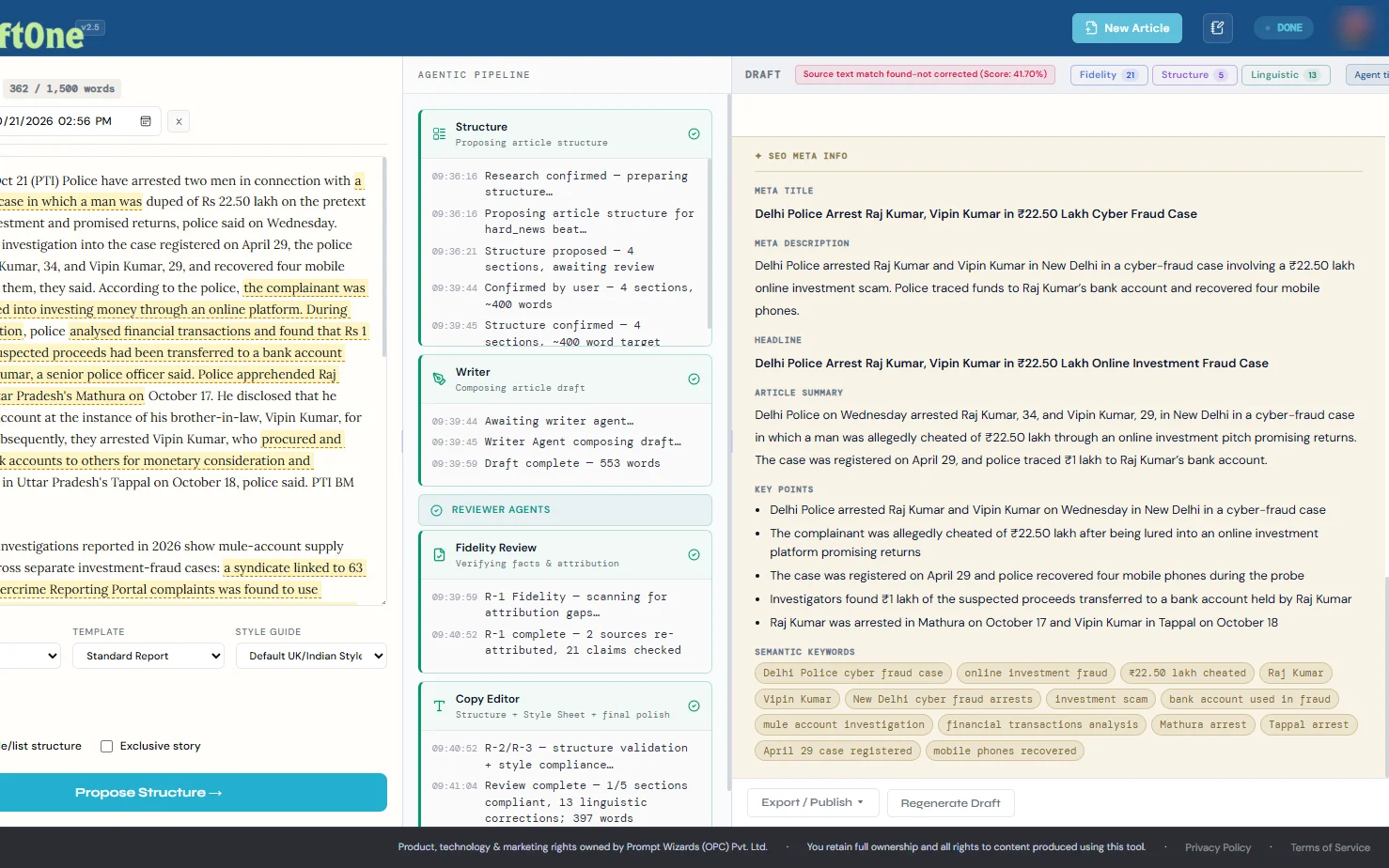
 Editorial planning
AI platforms cite publishers that cover a topic in depth. TopicVine does two things. It builds a topic tree of the subtopics and entities around any subject. And it collects the real questions people ask on Google, scores each one for relevance, and clusters them. The scoring is fixed and repeatable, so the same input gives the same plan. The result is a coverage plan the editor can defend.
Questions of the kind TopicVine collects · scores illustrative
Built from what readers search, in Hindi and English.
Each question gets a relevance score. Filter to the core.
Which story links to which, so authority builds up.
What to publish this week, and what is missing.
Decades of Punjab Kesari reporting are the group's deepest asset. Vectorising turns every story and photo into a searchable "meaning map", so AI can find what the archive knows, not just what it says word for word.
"Floods in Punjab in the 1980s" finds the right stories even when they use different words, in any of your languages.
Research and fact-checking tools answer from your own archive, with links to the original stories.
New stories automatically link to the most relevant past coverage, which also builds AI-search authority.
A story can be recommended the minute it is published, by its meaning, before it has any clicks.
Find archive photos by what they show, not by file name.
A clean, tagged archive is ready to license to AI companies, on your terms.
Beyond "more like this", AI can write the recommendation itself, grounded in your archive:
A single print story rarely lives in one place. The headline and opening are on page 1, the rest jumps to page 7, the photo sits with the photo desk, the caption in another file, the chart with the graphics team. Transit is built on AI harness engineering: a governed system that finds every piece of one story, stitches them in the right order, checks the result, and lands one complete digital story in the CMS draft folder.
The harness runs AI models inside your rules. It picks from hundreds of skills, checks each result, tries an approved alternative when a step fails, and asks an editor when it is unsure. It never invents a word.
A fixed workflow breaks on the first surprise: a missing jump, an odd file, a photo without web rights. The harness recovers and records every decision.

Meta, WhatsApp, Instagram and Facebook are trademarks of Meta Platforms, Inc.

Task management that lives where the newsroom already talks. Assign it, and stop chasing.
| Tool | What it does for Punjab Kesari | Status | Phase |
|---|---|---|---|
| Works now | |||
| Motion Desk | Animated explainers, shorts and slideshows made by our team, in your style. | Ready | 1 |
| Interactive embeds | Calculators and explorers readers operate, built for each big story. | Ready | 1 |
| Cadence | The live desk: every source on one screen, scored, tracked and routed. | Ready | 1 |
| WIZ | Assigns desk tasks on WhatsApp, follows up and reports status any time. | Ready | 1 |
| WhatsApp, Instagram, Facebook | Breaking-news cards within seconds, and reader briefings people can reply to. | Ready | 1 |
| DraftOne, English | Publication-ready English drafts from wires and research, in house style. | Ready | 1 |
| TopicVine | Coverage plans built from real reader questions, scored. | Ready | 1 |
| Tuned for Punjab Kesari | |||
| Citation Watch | Weekly tracking of who AI platforms cite on your key questions. | Tuning | 1 |
| Archive vectorisation | The archive made searchable by meaning. Consultancy, then build. | Tuning | 1–2 |
| Feed automation | Weather, AQI, markets, cricket and government releases, drafted to template. | Tuning | 2 |
| Print to digital | Each print story to the CMS draft folder, word for word, with legacy fonts converted. | Tuning | 2 |
| Optimizer, MetaGen | Answer-first micro-edits and AI-search metadata on every story. | Tuning | 2 |
| Fact Checker | Checks claims, including viral WhatsApp forwards, with sources. | Tuning | 2 |
| Language tuning | |||
| DraftOne, Hindi, Punjabi, Urdu | Drafts in each title's style, after a style sheet and a review loop with your editors. | Tuning | 3 |
| Cross-language publishing | Stories adapted between titles and languages, approved by an editor. | Tuning | 3 |
A meeting with your editorial, digital and video heads to agree priorities.
A sample Motion Desk explainer and an interactive graphic on stories you choose, and a Cadence demonstration on your own feeds.
Scope, cost and timeline in writing.